
What Is a Spread in Trading?

The Trading Classroom
Written and reviewed by our editorial team · Updated June 2026

A spread in trading is the gap between the buy price and the sell price. It is your broker's built-in fee, charged the moment a trade opens. On EUR/USD the spread is typically 0.6 to 1.5 pips in busy hours, and one pip is worth $10 on a standard 1 lot trade.
What you'll learn
 What you'll learn
You Get Two Prices, Not One
You place your very first trade, the platform confirms it, and before you can blink your account is already showing a small loss. The market did not move against you in half a second. You just met the spread.
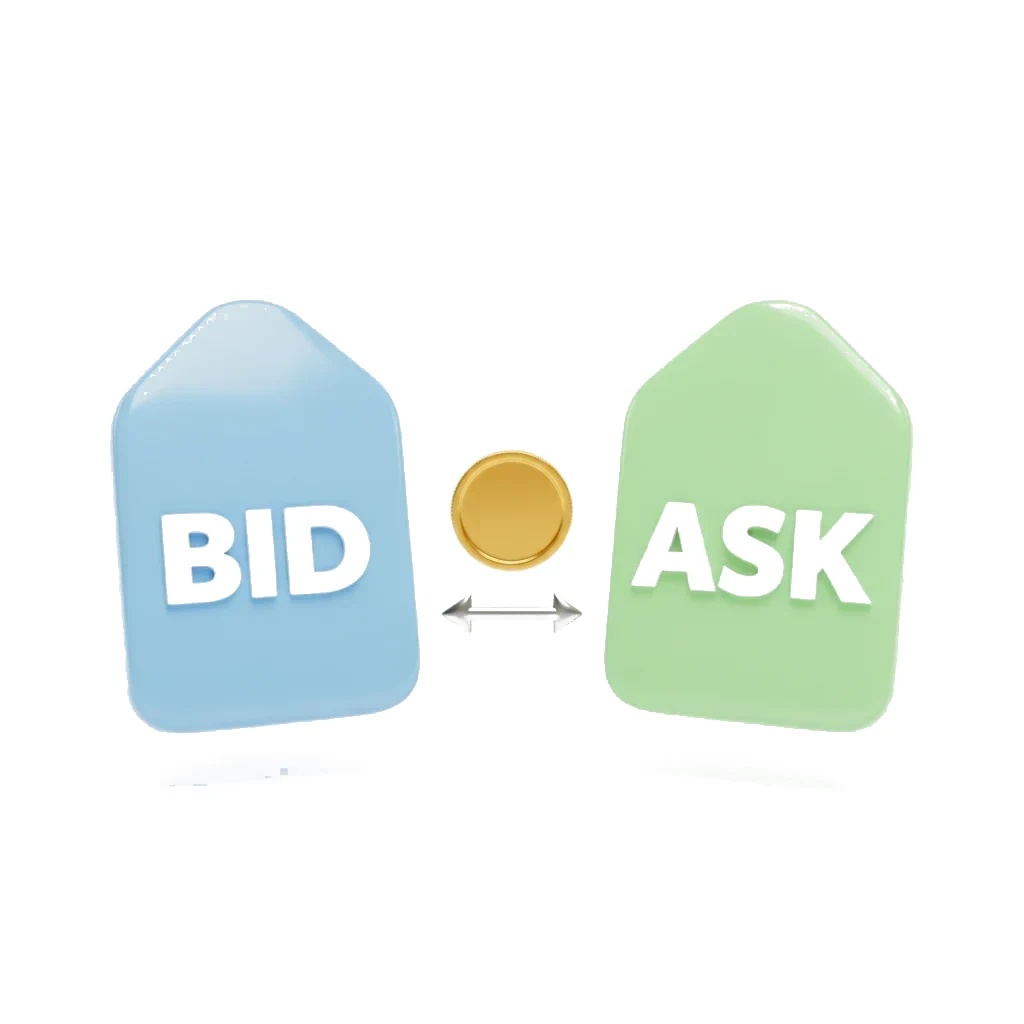
Every currency pair on your screen carries two prices at the same time. The bid is the price you can sell at. The ask (some platforms call it the offer) is the price you can buy at. The ask is always the higher of the two, which is the whole point of what follows.
Say EUR/USD is quoted 1.08500 / 1.08512. You click buy, so you get filled at the ask, 1.08512. From that instant your position is valued at the bid, 1.08500. That 0.00012 difference is the spread. In pips (the standard unit of price movement, the fourth decimal place on most pairs) that is 1.2 pips.
This is not some trading quirk invented to annoy you. Every quoted market works this way, from shares to crypto to the currency booth at the airport. You simply notice it more in forex, because the trades are frequent and your platform reports the damage in real time, down to the cent.

Why the Gap Exists at All
Every time you buy, somebody has to sell to you. That somebody is usually a market maker or a liquidity provider whose entire job is to stand there quoting both sides all day, buying at the bid and selling at the ask, and keeping the difference.
Picture the exchange booth at the airport. The board shows one rate for selling you euros and a distinctly worse one for buying them back, and that gap is how the booth pays its rent. Your broker runs exactly the same model, just with far tighter numbers and a much nicer screen.
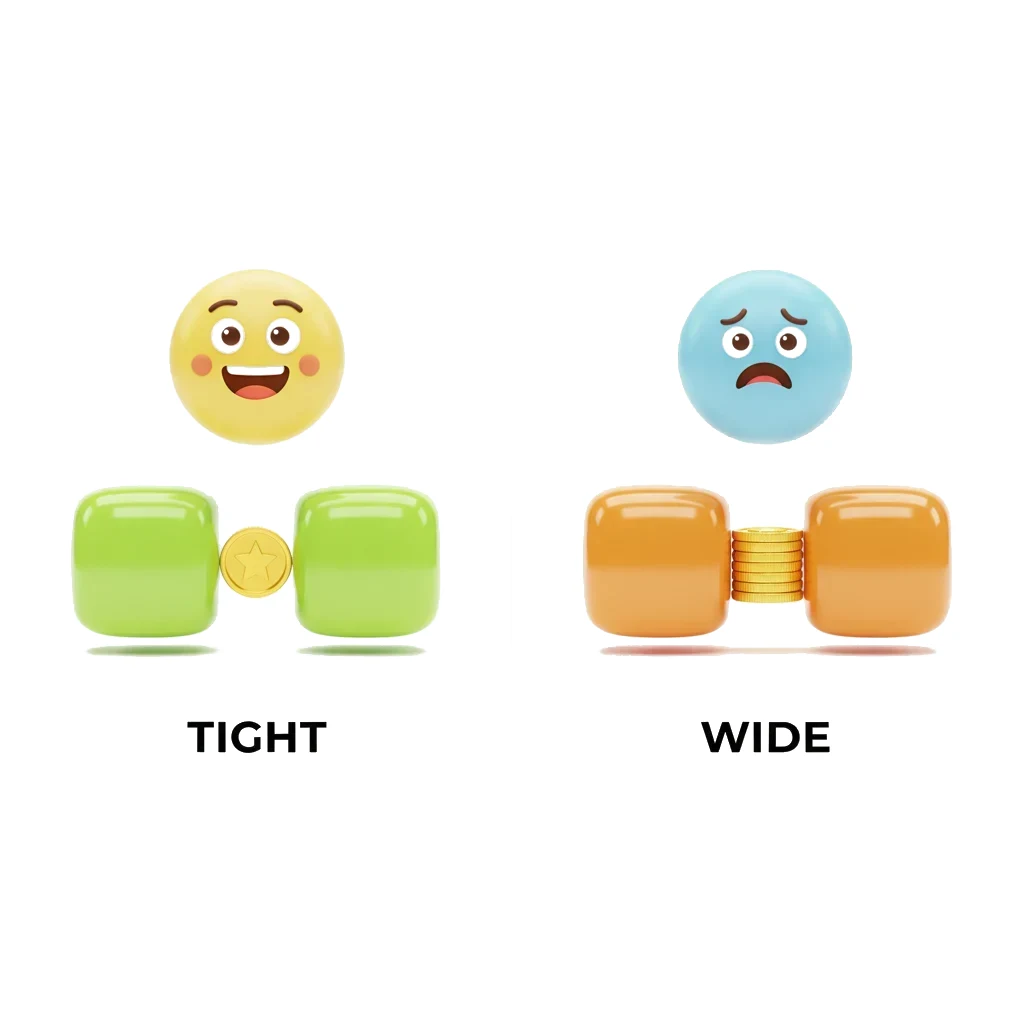
The spread pays them for two things: the risk of holding a position nobody else wanted, and the service of always having a price ready when you want one. When risk goes up or fewer participants are around, the gap gets wider. When the market is calm and busy, it tightens.
For you, the important part is that this is a fee that never appears as a line on your statement. A commission shows up as a visible charge. The spread is baked into the price itself, silently, on every single trade you take. That is exactly why beginners underestimate it for months.

"Zero spread" is never free
Raw or ECN accounts advertise spreads near 0.0 pips, then charge commission instead, often around $3.50 per side per lot. That is $7 per lot round turn, which is the same as paying 0.7 pips.

Ollie's tip
I check the spread before every single trade. It is the one cost you pay whether the trade wins or loses.
Working Out What a Spread Really Costs
To turn a spread into actual money you need two things: the spread in pips, and the value of one pip for your position size. Nothing more.
Pip value on a USD-quoted pair is easy. A standard lot is 100,000 units, and one pip is 0.0001, so 100,000 x 0.0001 = $10 per pip. A mini lot (0.10) is 10,000 units, giving $1 per pip. A micro lot (0.01) is 1,000 units, giving $0.10 per pip.
Now the full worked example. You buy 0.10 lots of EUR/USD quoted 1.08500 / 1.08512. Step 1: the spread is 1.08512 minus 1.08500 = 0.00012, which is 1.2 pips. Step 2: your pip value at 0.10 lots is 10,000 x 0.0001 = $1.00. Step 3: the spread cost is 1.2 x $1.00 = $1.20.
So the moment that trade opens it shows minus $1.20, and price has to travel 1.2 pips in your favour just to get you back to zero. On a full 1 lot the same trade would cost 1.2 x $10 = $12.
The bill nobody budgets for
Five trades a day, 20 trading days a month, at 0.10 lots with a 1.2 pip spread: 100 x $1.20 = $120 a month, or $1,440 a year. On a $2,000 account that is 72% of the balance paid in spread alone.
Fixed Spreads vs Variable Spreads
A fixed spread is a number your broker promises to hold steady, say 2 pips on EUR/USD, through most market conditions. A variable spread (also called floating) moves second by second with real market liquidity, and can be a fraction of a pip one minute and much wider the next.
Neither one is a free lunch, and the marketing on both sides is a bit loud. Fixed spreads cost you more on average, because the broker has to charge enough in the calm hours to survive the wild ones. Variable spreads are cheaper most of the time, then occasionally punch you in the ribs during news.
Most retail brokers today offer variable spreads by default. If your platform shows a spread that never changes, you are on a fixed account, and it is worth comparing the average cost against a floating one before you settle in.
Whichever type you end up on, judge it by the average, not by the headline number on the marketing page. That headline is almost always EUR/USD during the London and New York overlap, the cheapest hour of the cheapest pair. Watch the real number on your own platform for a week, at the hours you actually trade.
| What to compare | Fixed spread | Variable spread |
|---|---|---|
| How it behaves | Same number all day | Moves with market liquidity |
| Typical EUR/USD | About 2 to 3 pips | About 0.6 to 1.5 pips in busy hours |
| During big news | Usually held, but orders may be requoted or rejected | Can spike to 10 pips or more for seconds |
| Best suited to | Traders who want predictable costs | Traders active during London and New York hours |
Ollie's tip
Small size, small spread bill. Trading 0.01 lots instead of 0.10 cuts that 1.2 pip cost from $1.20 to 12 cents.
When Spreads Widen (And Why It Stings)
Spreads are a live measure of how many people are willing to trade right now. Take those people away and the gap opens up fast. Three moments do this reliably.
First, scheduled news. Non-Farm Payrolls, inflation figures and central bank decisions can push a normally 1 pip EUR/USD spread to 10 or 20 pips for a few seconds, because liquidity providers pull their quotes rather than get run over. Second, the daily rollover around 5pm New York time, when the trading day rolls to the next value date and volume briefly dries up. Third, the Sunday open and public holidays, when half the world is not at its desk.
Instrument choice matters too. Exotic pairs and thinly traded CFDs carry spreads that are permanently 10 to 50 times wider than EUR/USD, and they stay that way all day. A strategy that works on a 1 pip spread often falls apart on a 40 pip one, and the strategy did not change at all.
None of this means the market is rigged against you. Liquidity is a real, physical thing that comes and goes with the clock and the calendar. What it does mean is that the identical trade can cost you several times more at 5pm New York, or four seconds after an inflation release, than it does mid afternoon in London.
Your stop loss feels the spread too
A buy position closes at the bid, but a sell position closes at the ask. So a sudden spread widening can trigger the stop on a short trade even when the bid barely moved. Leave room for it.

Seeing the Spread in MetaTrader 5
MT5 will show you the live spread if you ask it to. Right-click inside the Market Watch window and tick the Spread column, and a number appears next to every symbol. Careful though: MT5 reports it in points, not pips. On a 5-digit broker, 12 points means 1.2 pips.
Your chart is also lying to you slightly by default, because MT5 draws candles from the bid price only. Right-click the chart, open Properties, go to the Show tab and enable the Ask line. Now you can see the real price you would buy at, sitting a little above every candle.
Worth knowing early: the spread is one of three costs on a typical trade. The other two are commission (on raw accounts) and swap, the small overnight financing charge or credit applied when you hold a position past rollover. Add all three together before you decide whether a strategy actually pays.
Then build one small habit: glance at the spread before you click. If you are aiming for a 5 pip target with a 2 pip spread, 40% of your goal is gone before the trade even starts. Spread is not the only cost in trading, but it is the one you pay on every single trade, winners and losers alike.
Ollie's tip
When a big number is due, I sit on my paws for five minutes. Spreads usually calm down quickly afterwards.
Professor Ollie's Lesson

- The ask is what you buy at, the bid is what you sell at, and the gap between them is the spread.
- A 1.2 pip spread costs $1.20 on 0.10 lots of EUR/USD and $12 on a full 1 lot, because one pip is worth $10 per standard lot.
- You pay the spread once per round trip, on entry, which is why a fresh trade always opens slightly in the red.
- Zero spread accounts swap the spread for commission, often about $7 per lot round turn, which is the same as 0.7 pips.
- Spreads widen around news, the 5pm New York rollover and the Sunday open, so check the number in Market Watch before you click.
Check yourself
Five quick questions on this lesson. Nothing is saved and nobody is watching.
EUR/USD is quoted 1.09420 / 1.09434 and you click buy. What price do you get, and what is your new position valued at?
Common questions
QIs the spread the same thing as a commission?
No. The spread is built into the two prices you are quoted, so you never see it charged separately. A commission is a visible fee, typically around $3.50 per side per lot. Standard accounts usually charge only a spread, while raw accounts charge a very tight spread plus commission, and the two often work out similar in total.
QWhat is a good spread for EUR/USD?
On a standard variable account, roughly 0.6 to 1.5 pips during the London and New York hours is normal. On a raw account you might see 0.0 to 0.3 pips plus commission. If your broker consistently quotes more than 2 pips on EUR/USD in busy hours, you are paying above the going rate.
QDo I pay the spread when I open and again when I close?
You pay it once per round trip. You enter at the ask and exit at the bid, so the full cost is already reflected the second the trade opens. That is why the position shows a small loss straight away rather than an extra charge appearing at the end.
QWhy does my trade show a loss immediately after opening?
That is the spread, not a mistake and not the market moving. Buy 0.10 lots of EUR/USD with a 1.2 pip spread and the platform shows minus $1.20 instantly, because you bought at the ask and the position is valued at the bid. Price has to move 1.2 pips your way to reach breakeven.
What Is a Pip in Forex, and What Is One Worth?
Next lesson →Forex Leverage and Margin, Explained Simply
Risk warning. Trading forex and CFDs carries a high risk of losing money rapidly due to leverage. This lesson is educational content, not financial advice. Professor Ollie is our teaching mascot. Lessons are written and reviewed by The Trading Classroom editorial team.